
Table of Contents
ToggleIntroduction to How Digital Marketing Helps Travel Agencies to Get More Bookings
The travel industry has completely transformed in the last few years. Today, most travelers search online before booking any trip. They compare destinations, check reviews, explore social media, and only then make a booking decision. This is exactly why understanding digital marketing for travel agencies is crucial in 2026. Travel businesses that rely only on offline marketing are losing potential customers every day. On the other hand, agencies that use strong online marketing strategies for travel agencies are getting consistent inquiries and bookings.
Customers now expect quick responses, personalized packages, and online booking options. This is where digital marketing plays a major role. By using the right travel agency marketing plan, agencies can attract the right audience and convert them into paying customers. Whether it is through SEO, social media, paid ads, or email campaigns, digital marketing allows agencies to stay visible and competitive.
At Digimyz, we are a professional digital marketing company that has worked with travel businesses and tour operators to improve their visibility and increase bookings through strategic campaigns. With the right digital marketing ideas for tour operators, agencies can build trust and generate leads consistently. Understanding how travel agencies get more bookings online is not just about advertising; it’s about building relationships, offering value, and being present where customers are searching. This blog will explain in detail how digital marketing helps travel agencies grow bookings and revenue in 2026.
Why It Matters in 2026
In 2026, the travel industry is more competitive than ever. Travelers have access to multiple booking platforms, online reviews, and social media recommendations. Because of this, having strong online marketing strategies for travel agencies is no longer optional. It is essential. Customers often search on Google, Instagram, or YouTube before deciding where to travel. Agencies that appear in these searches get more inquiries and bookings.
Understanding how digital marketing helps travel agencies is important because the customer journey now starts online. A traveler may search for honeymoon packages, watch destination videos, and then contact an agency that appears first on Google. This is why seo for travel agency website and google ads for travel agencies play a key role in generating leads.
Another important factor is personalization. Travelers want customized experiences. Through data tracking and analytics, agencies can understand customer preferences and send targeted offers. This improves lead generation for travel agencies and increases conversion rates.
At Digimyz, we help travel agencies build digital strategies that focus on visibility, trust, and conversion. By using social media marketing for travel agencies and targeted ads, agencies can connect with travelers at the right time. The importance of digital marketing in 2026 lies in its ability to deliver consistent leads, improve brand awareness, and help agencies grow even in a competitive market.
Key Benefits of Digital Marketing for Travel Agencies
Digital marketing provides several benefits for travel agencies looking to grow bookings. One of the biggest advantages is visibility. With proper seo for travel agency website, agencies can rank on Google for destination-based keywords. This helps them attract travelers who are actively searching for trips. Organic visibility reduces dependency on offline marketing and increases long-term growth. Professionals who learn these strategies from the top 10 digital marketing institutes in Gujarat can effectively apply SEO and digital marketing techniques to help travel agencies increase online bookings and brand visibility.
Another key benefit is targeted advertising. Using google ads for travel agencies, businesses can target specific audiences based on location, interests, and travel intent. This ensures that marketing budgets are used effectively. Agencies can reach people who are already planning trips, making it easier to convert them into customers.
Social media marketing for travel agencies also helps build trust. Travelers love visual content such as destination photos, videos, and customer testimonials. Sharing travel experiences on Instagram and Facebook inspires users and encourages inquiries. This plays a major role in increase travel bookings online.
A structured travel agency marketing plan also includes email marketing, retargeting ads, and content marketing. These strategies keep potential customers engaged until they are ready to book. At Digimyz, we have seen travel agencies increase inquiries by implementing structured digital strategies. Understanding how digital marketing helps travel agencies allows businesses to create long-term growth and consistent bookings.
Latest Trends and Insights in Travel Marketing (2026)
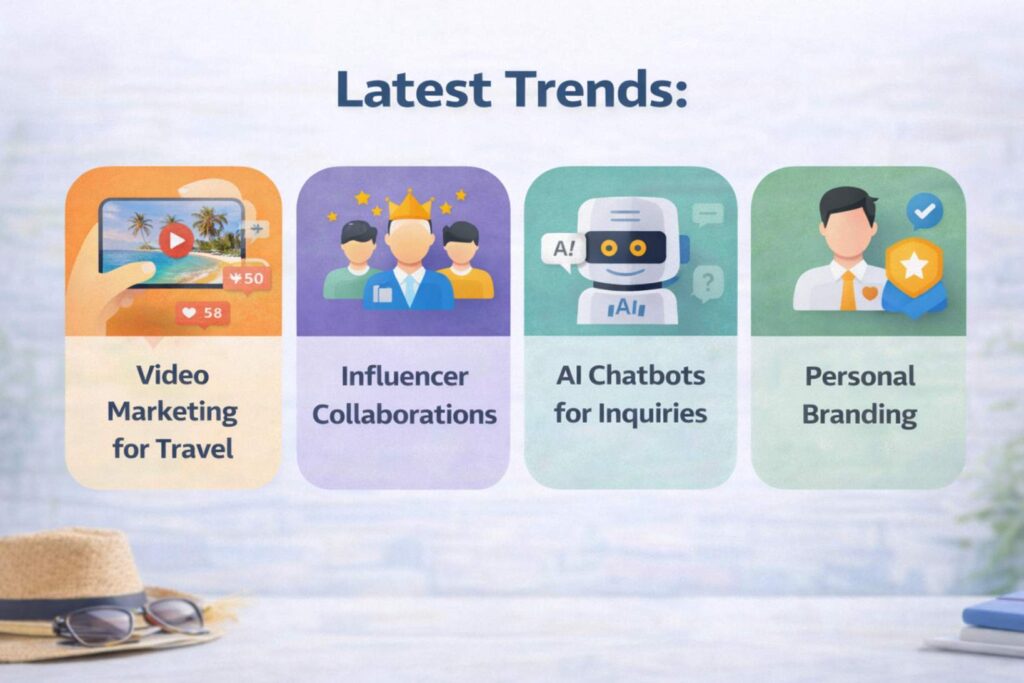
The travel industry continues to evolve with new digital trends. One major trend is video marketing. Travelers now watch short videos before choosing destinations. This makes social media marketing for travel agencies extremely effective. Reels, YouTube Shorts, and destination videos help agencies showcase experiences and attract travelers.
Another trend is personalized marketing. Customers expect customized packages based on their preferences. Using analytics tools, agencies can understand user behavior and send tailored offers. This improves lead generation for travel agencies and increases conversions.
Mobile booking is also growing. Many users search and book trips through smartphones. A mobile-friendly website with proper seo for travel agency website helps agencies capture these users. Voice search optimization is also becoming important as people use voice assistants to search for travel deals.
Influencer marketing is another growing trend. Collaborating with travel influencers helps agencies reach new audiences. A strong travel agency marketing plan now includes influencer campaigns and user-generated content.
At Digimyz, we implement modern strategies like retargeting ads and automated email campaigns. These tools help agencies stay connected with potential customers and encourage bookings. Keeping up with trends ensures agencies remain competitive and continue to increase travel bookings online.
Challenges in Digital Marketing for Travel Agencies
While digital marketing offers many benefits, it also comes with challenges. One major challenge is competition. Many travel agencies are investing in online marketing, making it harder to stand out. To succeed, agencies must use unique branding and strong best marketing strategies for travel business.
Another challenge is budget management. Without proper planning, google ads for travel agencies can become expensive. Agencies must monitor performance and optimize campaigns regularly. This requires expertise and data analysis.
Content creation is also demanding. Travel marketing relies heavily on high-quality visuals and engaging content. Maintaining consistency on social media and blogs requires time and effort. Effective social media marketing for travel agencies needs creative planning and regular updates.
SEO is a long-term strategy. Many agencies expect instant results from seo for travel agency website, but it takes time to rank and generate traffic. However, once SEO starts working, it delivers consistent leads.
At Digimyz, we help travel agencies overcome these challenges by creating structured digital strategies and tracking performance. With proper planning and guidance, agencies can turn these challenges into opportunities and grow bookings through digital marketing.
Top Strategies on How Digital Marketing Helps Travel Agencies Get More Bookings
1. SEO for Travel Agency Website
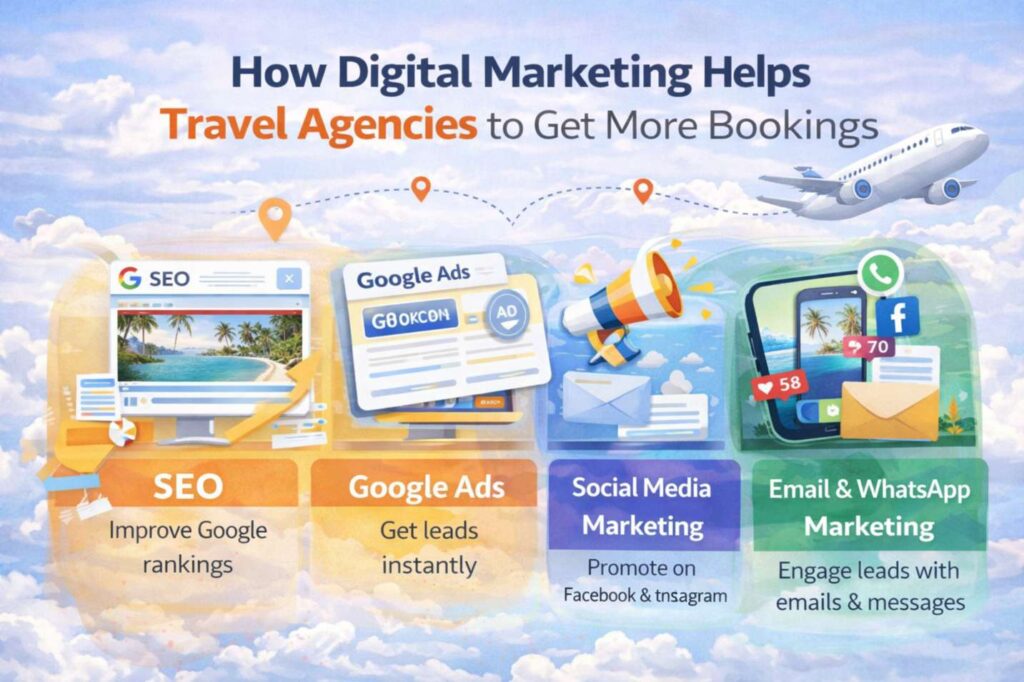
Search engine optimization is one of the strongest foundations when we talk about how digital marketing helps travel agencies grow consistently. Most travelers begin their journey with a Google search like “best honeymoon packages” or “Europe tour package from India.” If your website appears on the first page, you automatically gain trust and visibility. This is why seo for travel agency website is extremely important in 2026.
A strong SEO strategy includes keyword optimization, technical improvements, blog creation, and local SEO. By targeting keywords like destinations, seasonal packages, and travel types, agencies can attract high-intent traffic. This directly supports the goal to increase travel bookings online. Unlike paid ads, SEO provides long-term organic traffic.
2. Social Media Marketing for Travel Agencies
Social media plays a powerful role in understanding how travel agencies get more bookings online. Travel is a visual industry. People are inspired by beautiful destinations, travel experiences, and customer stories. That is why social media marketing for travel agencies is one of the best growth strategies in 2026.
Platforms like Instagram, Facebook, and YouTube allow agencies to showcase destinations through reels, stories, testimonials, and live sessions. Engaging content builds trust and emotional connection with travelers. When agencies consistently post travel inspiration, they stay in the customer’s mind until booking time.
At Digimyz, we create structured content calendars and paid social campaigns that target travel enthusiasts. By combining organic content with paid promotions, agencies can expand their reach significantly. Social media ads allow targeting based on interests, behaviors, and demographics. This improves lead generation for travel agencies and increases inquiries.
3. Google Ads for Travel Agencies
While SEO provides long-term results, google ads for travel agencies deliver immediate visibility. When users search for travel packages, paid ads appear at the top of search results. This captures high-intent customers who are ready to book. That is why paid advertising is a crucial part of understanding how digital marketing helps travel agencies grow faster.
Google Ads allows agencies to target specific destinations, budgets, and customer interests. For example, agencies can run separate campaigns for honeymoon packages, international tours, or domestic holidays. This ensures highly relevant traffic. A well-designed landing page increases the chances to increase travel bookings online.
At Digimyz, we focus on performance-based ad campaigns. We continuously optimize keywords, bidding strategies, and ad creatives to improve ROI. Data tracking helps agencies understand which campaigns generate the most leads.
4. Lead Generation Funnels for Travel Agencies
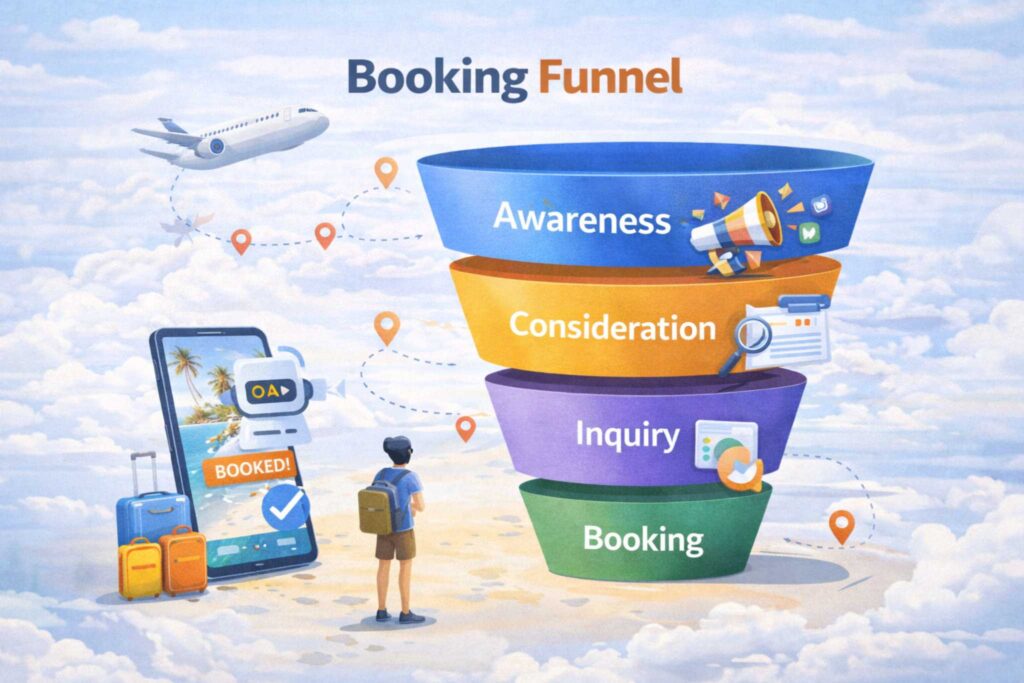
Lead generation is at the heart of understanding how travel agencies get more bookings online. Getting website traffic is not enough. Agencies must convert visitors into inquiries. This is where structured funnels play a major role.
A strong travel agency marketing plan includes landing pages, lead forms, WhatsApp chat integration, and downloadable travel guides. When users submit their details, agencies can follow up through calls, emails, and remarketing campaigns. This improves lead generation for travel agencies and reduces lost opportunities.
At Digimyz, we build automated funnels that nurture leads through follow-up emails and retargeting ads. For example, if a user downloads a honeymoon brochure, they receive personalized offers and reminders. This increases the chances to increase travel bookings online.
5. Content Marketing and Blogging Strategy
Content marketing is one of the most powerful long-term strategies in understanding how digital marketing helps travel agencies build authority and trust. Travelers search for travel guides, best time to visit destinations, visa information, and itinerary suggestions. Agencies that create helpful content attract organic traffic consistently.
A strong blogging strategy improves seo for travel agency website by targeting informational keywords. When users find helpful blogs, they trust the agency and are more likely to inquire. This directly supports efforts to increase travel bookings online.
At Digimyz, we create SEO-optimized blogs and destination guides for travel brands. These blogs rank on search engines and bring consistent traffic. Content marketing also supports social media marketing for travel agencies, as blog content can be repurposed into reels, posts, and email newsletters.
6. Email Marketing for Travel Agencies
Email marketing is one of the most underrated yet powerful tools when it comes to how digital marketing helps travel agencies generate repeat bookings. Many users visit a travel website but do not book immediately. They compare prices, check dates, and plan later. This is where email marketing helps agencies stay connected with potential customers.
With a proper travel agency marketing plan, agencies can collect email data through website forms and lead magnets like travel guides or offers. Once leads are collected, agencies can send personalized travel deals, seasonal packages, and reminders. This improves lead generation for travel agencies and increases conversion rates.
At Digimyz, we create automated email funnels for travel brands. These emails include destination inspiration, limited-time offers, and travel tips. Personalized email campaigns help agencies build relationships and trust with customers. Over time, this leads to repeat bookings and referrals.
7. Influencer and Collaboration Marketing
Influencer marketing is growing rapidly in the travel industry. Travelers trust recommendations from influencers and content creators. This makes influencer collaboration one of the best digital marketing ideas for tour operators in 2026. Agencies can partner with travel bloggers and influencers to showcase destinations and packages.
When influencers share real travel experiences, it builds trust and encourages followers to book trips. This improves how travel agencies get more bookings online because users feel confident about the destination and service. Influencer videos and reels also perform well on social media, increasing reach and engagement.
At Digimyz, we help travel agencies identify the right influencers based on audience and niche. We plan campaigns that highlight travel packages and experiences. Influencer content can also be reused in ads and websites, improving visibility.
Lorem ipsum dolor sit amet, consectetur adipiscing elit. Ut elit tellus, luctus nec ullamcorper mattis, pulvinar dapibus leo.
8. Website Optimization and Conversion Funnels
Having a website is not enough. It must be optimized to convert visitors into leads. A well-structured website is essential to understand how digital marketing helps travel agencies increase bookings. Visitors should easily find packages, pricing, and contact options.
A strong seo for travel agency website strategy also includes website speed, mobile optimization, and clear call-to-action buttons. When users find information quickly, they are more likely to inquire. Adding WhatsApp chat and quick inquiry forms improves lead generation for travel agencies.
At Digimyz, we build conversion-focused websites for travel businesses. We create landing pages for specific destinations and campaigns. These landing pages improve conversion rates from ads and social media traffic.
9. Retargeting Ads for Travel Agencies
Not every visitor books immediately. Many users visit a travel website, check packages, and leave. Retargeting ads help bring these users back. This strategy is essential in understanding how travel agencies get more bookings online.
Retargeting ads show travel offers to users who previously visited the website or interacted with social media pages. This reminds them about the agency and encourages them to complete their booking. Retargeting works especially well for high-ticket packages like international tours and honeymoon trips.
At Digimyz, we run retargeting campaigns on Google and social media platforms. These campaigns show customized ads based on user behavior. This improves lead generation for travel agencies and increases conversion rates.
10. Local SEO and Google Business Optimization
Local search plays a big role in travel bookings. Many users search for travel agencies near them. Optimizing Google Business profiles helps agencies appear in local search results. This is a key part of seo for travel agency website and local marketing.
A well-optimized Google Business profile includes photos, reviews, and updated contact details. Positive reviews build trust and encourage inquiries. Local SEO helps agencies appear when users search for travel services in their city.
At Digimyz, we optimize Google Business listings and local keywords. This improves visibility for location-based searches. Local SEO supports online marketing strategies for travel agencies and helps generate walk-in and online inquiries.
Conclusion
Understanding how digital marketing helps travel agencies is essential for growth in 2026. With strong online marketing strategies for travel agencies, businesses can attract more customers and increase bookings consistently. SEO, social media, paid ads, and content marketing all play a role in building visibility and trust.
Travel agencies that invest in digital marketing will stay ahead of competitors. A structured travel agency marketing plan ensures consistent lead generation and conversions. At Digimyz, we help travel brands implement strategies that deliver real results.
F.A.Q.
To get more bookings as a travel agent, you need a strong online presence and a clear digital marketing strategy. Start with an optimized website, run targeted Meta and Google Ads, and use social media marketing to showcase destinations and offers. Collect customer reviews and promote testimonials to build trust. Email and WhatsApp marketing also help in follow-ups and repeat bookings. Using SEO and paid ads together can significantly increase visibility and attract high-intent travelers who are ready to book packages online.
The five key importance of digital marketing are online visibility, targeted reach, measurable results, cost-effectiveness, and higher conversions. Digital marketing allows businesses to reach the right audience based on interests and behavior. It provides detailed performance tracking, helping businesses measure ROI. Compared to traditional marketing, digital campaigns are more affordable and scalable. For travel agencies, digital marketing increases inquiries, builds brand awareness, and helps generate consistent bookings through search engines and social media platforms.
The best marketing strategy for a travel agency includes a mix of SEO, social media marketing, paid ads, and content marketing. SEO helps your website rank on Google when customers search for travel packages. Social media platforms like Instagram and Facebook build engagement and trust. Running Google and Meta Ads helps target users who are actively searching for travel services. Combining organic marketing with paid campaigns ensures consistent traffic and leads for travel agencies.
The seven main types of digital marketing are Search Engine Optimization (SEO), Social Media Marketing (SMM), Pay-Per-Click Advertising (PPC), Content Marketing, Email Marketing, Affiliate Marketing, and Influencer Marketing. Each type plays a unique role in promoting a business online. For travel agencies, SEO and PPC help attract search-based customers, while social media and influencer marketing create engagement and brand awareness. Combining multiple strategies provides better results and higher booking potential.
To attract customers to a travel agency, focus on creating attractive travel packages and promoting them online. Use high-quality destination images and videos on social media platforms. Offer limited-time discounts and early-bird deals. Optimize your website with SEO to rank for travel-related searches. Collect and showcase customer reviews to build credibility. Running targeted ads and retargeting campaigns can also bring back website visitors and convert them into paying customers.
The five key marketing strategies include target audience research, content marketing, paid advertising, social media engagement, and performance tracking. Understanding your ideal customer helps create personalized campaigns. Content marketing builds trust and authority, while paid ads generate quick leads. Social media helps in brand building and engagement. Tracking campaign performance using analytics tools ensures better optimization and improved return on investment for travel agencies.